
Addiction & Dependency Counselling in Bedford & Online

Substance Use Counseling
Focused sessions to help you manage and overcome dependencies on alcohol, drugs, and other substances.

Behavioral Addiction Support
Specialised guidance to address compulsive behaviour’s such as gambling, gaming, and more.

Personalised Recovery Planning
Customised strategies and tools to support your unique journey toward sustained wellness.
My Approach
Discover personalised therapy to guide you through overcoming addiction with compassionate, tailored support.

Step One: Personalised Assessment
Begin with a thorough evaluation to understand your unique challenges and create a customised plan for lasting recovery.

Step Two: Guided Counseling
Engage in expert-led sessions designed to build resilience and develop practical strategies for managing dependencies.

Step Three: Ongoing Support
Receive continuous encouragement and resources to maintain progress and prevent relapse for sustained well-being.
What Is Addiction?
Addiction, whether to substances or behaviours, is understood in the disease model as a chronic, relapsing condition that affects the brain’s reward, motivation, and self‑regulation systems. It isn’t simply about willpower or choice — it’s a pattern that develops when something external temporarily soothes, numbs, or distracts from an internal struggle the mind hasn’t yet been able to resolve. In this sense, the addiction itself is not the original problem; it’s the solution the mind found to cope with pain, overwhelm, trauma, or emotional disconnection. Over time, that solution becomes a problem in its own right. Effective therapy therefore focuses not on trying to control, moderate, or fight the addictive behaviour, but on understanding the thoughts, beliefs, and emotional wounds that drive it. When we work with the underlying thinking and the unmet needs beneath it, the compulsion loses its power because the mind no longer needs the addictive pattern to survive.
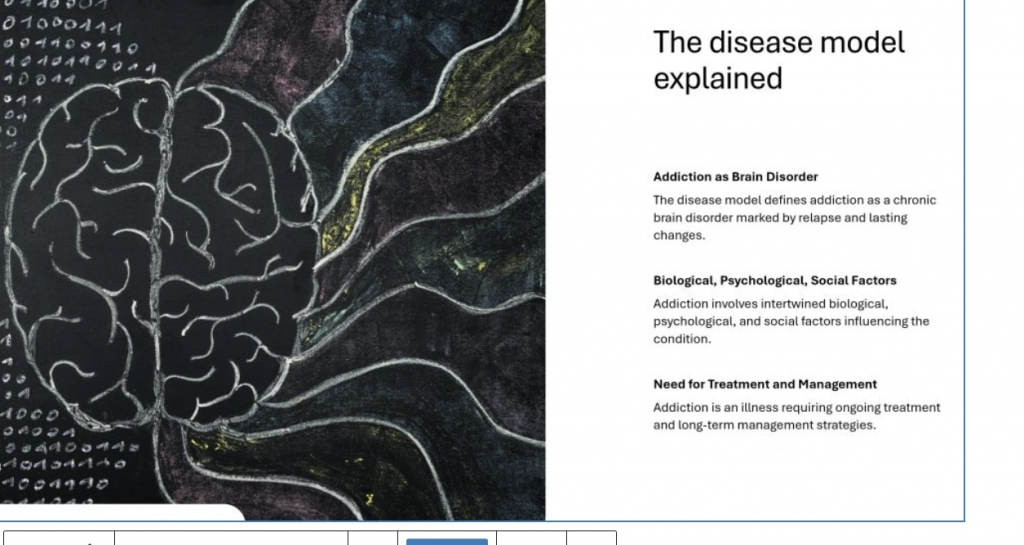
Many people find that addiction is rooted in unresolved trauma, and my Trauma Support Page explains how I help clients work through these deeper emotional layers.
Long‑term recovery depends on reconnecting with the self that existed before the addiction took over. This means gently working through the deeper emotional layers that fuel disconnection — resentment, fear, guilt, and shame — rather than trying to control the behaviour on the surface. When these emotions are understood and processed, the mind no longer needs the addictive pattern as protection. Having the right tools, support, and strategies is essential, because recovery isn’t about fighting the addiction; it’s about healing the internal world that made the addiction feel necessary in the first place.
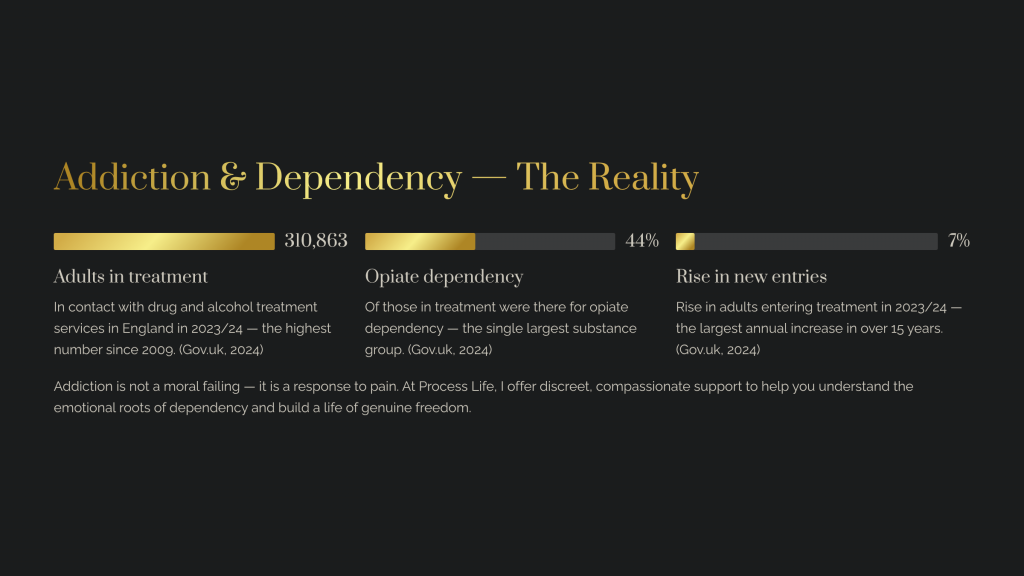
What People Often Say Before Starting Therapy
Many clients share things like:
- “I’ve tried to stop so many times, and I don’t know why I can’t.”
- “I feel ashamed and don’t want anyone to know.”
- “I’m scared of what this means about me.”
- “I don’t want to lose control, but I don’t know how to change.”
- “I’m exhausted from hiding this.”
If any of this resonates, you’re not alone — and it doesn’t mean you’re failing. It means you’re human, and something inside you is asking for support.
What Addiction Can Look Like
- Feeling out of control
- Using substances or behaviours to cope
- Shame, secrecy or hiding habits
- Strained relationships
- Emotional numbness or overwhelm
- Repeating patterns despite consequences
If anxiety or depression also play a role in your experience, my Anxiety & Depression Page explores how we can work with these emotions alongside addiction.
Who I Work With
I support people who are struggling with patterns that feel out of control, overwhelming, or difficult to talk about. You may relate to one or more of the following:
- Using substances or behaviours to cope with stress, trauma, or emotional pain
- Feeling ashamed, stuck, or unsure whether it “counts” as addiction
- Repeating patterns despite your best intentions
- Feeling disconnected from yourself or others
- Wanting to understand why this keeps happening
- Being in early recovery and needing emotional support
- Supporting a partner or family member affected by addiction
You don’t need a diagnosis or certainty before reaching out. If something in your life feels unmanageable, we can explore it gently together.
How Addiction Counselling Helps
Therapy helps you understand the emotional, relational and neurological patterns that drive addiction. Together we explore triggers, unmet needs, coping strategies and the deeper wounds beneath the behaviour.
My Approach
I blend trauma‑informed therapy, relational work, personal recovery experience, mindfulness and 12‑step integration to support sustainable recovery at a pace that feels safe.
How I Work Differently
Addiction is never just about the behaviour — it’s about what the behaviour is protecting you from. My approach reflects that.
I don’t:
- police your behaviour
- shame you for coping in the only way you’ve known
- push you to stop before you feel ready
- focus only on surface‑level strategies
Instead, I offer:
- trauma‑informed, relational therapy
- space to understand the emotional drivers beneath addiction
- support that honours your pace, not a rigid programme
- integration of mindfulness, recovery principles, and lived experience
- a compassionate, non‑judgmental environment where change becomes possible
This work is about healing the internal world that made the addiction feel necessary in the first place. If trauma has shaped any part of your experience with addiction, you may find it helpful to read my page on trauma recovery and stabilisation, which explains how the nervous system adapts during healing. You can also learn more about how trauma shows up in the body here.
My Lived Experience in Recovery
As someone in long‑term recovery myself, I understand how complex and deeply human these struggles can be. My own journey taught me that addiction is never a personal failure — it’s a response to pain, overwhelm, and unmet needs. This lived experience shapes the compassion, steadiness, and respect I bring to our work together. You won’t be met with judgment here, only understanding and a commitment to walk alongside you at your pace.

What Sessions Look Like
A calm, non‑judgmental space where you can talk openly, explore patterns and build healthier ways of coping.
If you’re based in Bedford or the surrounding areas, my Counselling in Bedford Page explains how I support local clients.
Prefer to work online? I also offer secure, trauma‑informed online counselling for clients across the UK. If you’d like to understand how online sessions work and whether they may suit your needs, you can read more on my Online Therapy page.
What to Expect in Your First Session
Your first session is a calm, pressure‑free space to arrive as you are. There’s no expectation to tell your whole story or label anything.
Together we will:
- explore what’s been happening at a pace that feels safe
- look at what you’re hoping for, even if you’re not sure yet
- begin understanding the emotional patterns beneath the behaviour
- create a sense of grounding so you don’t feel alone with it
Many people feel nervous before starting therapy. That’s completely normal. My role is to meet you with warmth, clarity, and compassion from the very first conversation.
Frequently Asked Questions
- Is addiction always substance‑related?
- No — behavioural addictions can be just as impactful.
- Do you work alongside 12‑step recovery?
- Yes — I integrate 12‑step principles where helpful.
- Do I need to be sure I have an addiction before starting?
- No. Many people begin therapy because something feels out of control or overwhelming. We can explore it together
- Can we look at trauma and addiction at the same time?
- Yes. Addiction often develops as a response to unresolved trauma, and we can support both areas at a pace that feels safe, without rushing or pressure.
If something in your life feels unmanageable or you’re simply curious about what support might look like, you’re welcome to reach out. We can explore things together at a pace that feels safe and respectful of where you are right now.
Experience Transformative Healing and Lasting Recovery
Discover how Process Life’s personalised addiction counselling empowers you to reclaim control, find hope, and build a healthier future.
Personalised Support Tailored to You
Receive expert guidance designed to address your unique challenges and foster sustainable change in your journey.
Evidence-Based Techniques for Success
Benefit from proven therapeutic methods that enhance your resilience and promote effective coping strategies throughout recovery.
Compassionate, Non-Judgmental Care
Experience a supportive environment where your struggles are understood, and your progress is celebrated every step of the way.
Useful Links
- Home – Alcoholics Anonymous Great Britain
- – Cocaine Anonymous CAUK Area
- Welcome to UKNA | UKNA | Narcotics Anonymous in the United Kingdom
- Overeaters Anonymous Great Britain | For anyone with eating issues
- Gamblers Anonymous – England, Wales & Ulster
- Online Meetings | S.L.A.A. UK
- Al-Anon UK | For families & friends of alcoholics
- Co-Dependents Anonymous UK –
Home